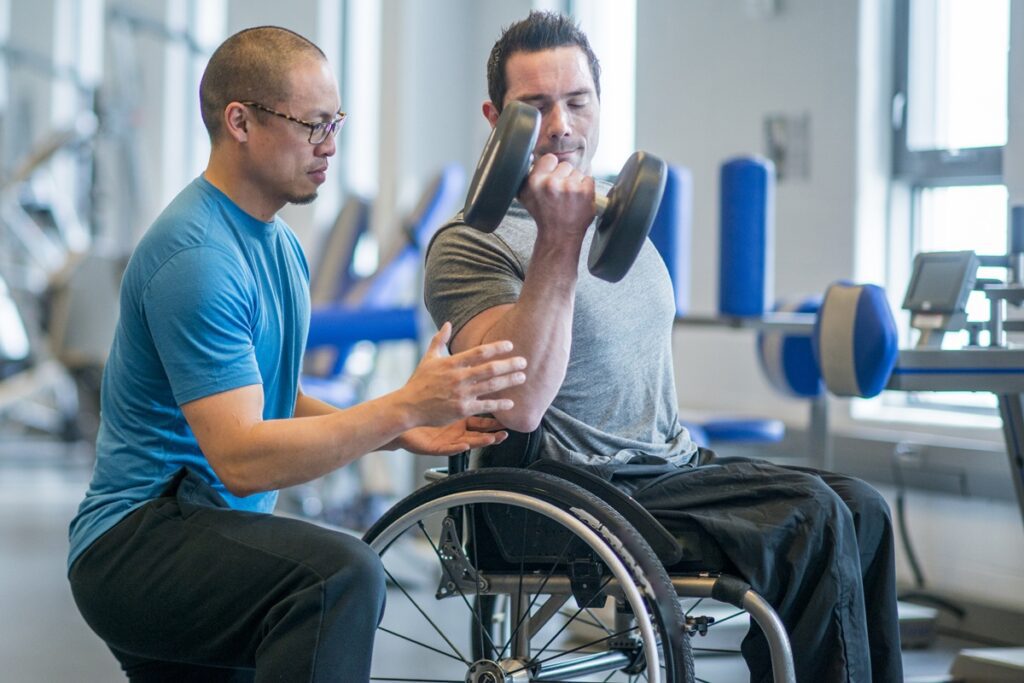
Build Strength & Mobility with Seated Wheelchair Exercises for Seniors
Staying strong and active is possible — and essential — for seniors in wheelchairs. According to the CDC's Physical Activity Guidelines for Older Adults, resistance and strength training at least 2–3 times per week can improve mobility, support independence, and reduce fall risk. Whether using simple equipment like resistance bands or inclusive, wheelchair‑friendly strength machines, seated workouts are one of the safest and most effective ways to maintain functional strength.
Usually, when we think about exercise, we think about activities that involve standing, walking, and moving around. For seniors who use a wheelchair, these types of activities may not be possible. Yet, regular exercise is just as important for seniors in wheelchairs for building strength, supporting independence, and staying healthy.
For many older adults, a loss of autonomy and independence can contribute to feelings of depression and loneliness. Not being able to engage in normal day-to-day activities like lifting basic household items, moving freely from room to room, or going outside without assistance can be frustrating.
Strength training changes that. When you're strong, moving through the day goes from a challenge to a pleasure - a reminder of improved fitness and health that motivates continued activity.
These 8 strength training exercises are an effective way to support independence and improve improve daily life.
Encouraging Safe, Effective Strength Gains in Wheelchair Users
Before we get into the exercises, let's take a moment to consider how wellness professionals can safely maximize results, including how the right equipment and approach can make all the different.
Even experienced fitness professionals know it can be tempting to “play it safe” with older adults in wheelchairs. While caution is important, being overly conservative can slow progress and limit the life-changing benefits of strength training. The goal is safe, progressive overload — applying enough challenge to build measurable improvements in strength, mobility, and independence.
Warm‑Up with Purpose
A brief, dynamic warm‑up — such as seated arm rotations, band pull‑aparts, or controlled torso twists — primes muscles and joints for optimal performance. Keep it active, not exhaustive, so clients are prepared for working sets without unnecessary fatigue.
Progressive Resistance Drives Results
Start at a safe, appropriate baseline, but ensure resistance progresses over time. Whether that’s adding tension to bands, increasing repetitions, or introducing accessible strength equipment, progression prevents plateaus and supports continued improvement.
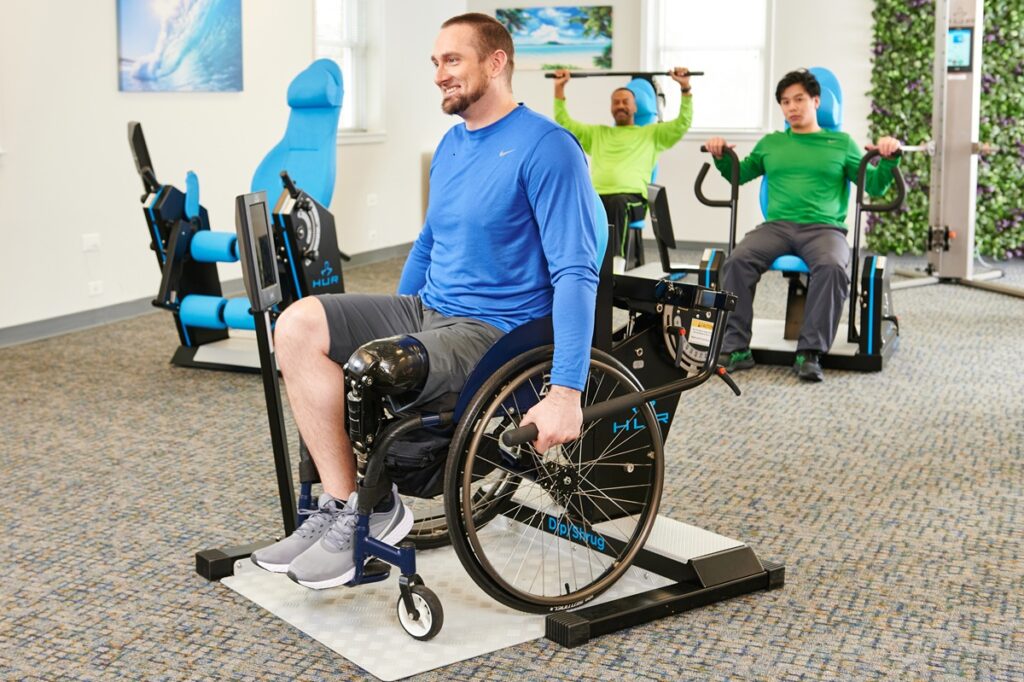
Inclusive Equipment Expands Training Options
Accessible strength options open up a wider range of safe, effective exercises for wheelchair users. Common examples include:
- Stretchy resistance bands for presses, pulls, and rotations
- Light dumbbells or medicine balls for seated strength and core work
- Accessible strength machines with low starting resistance and adjustable settings
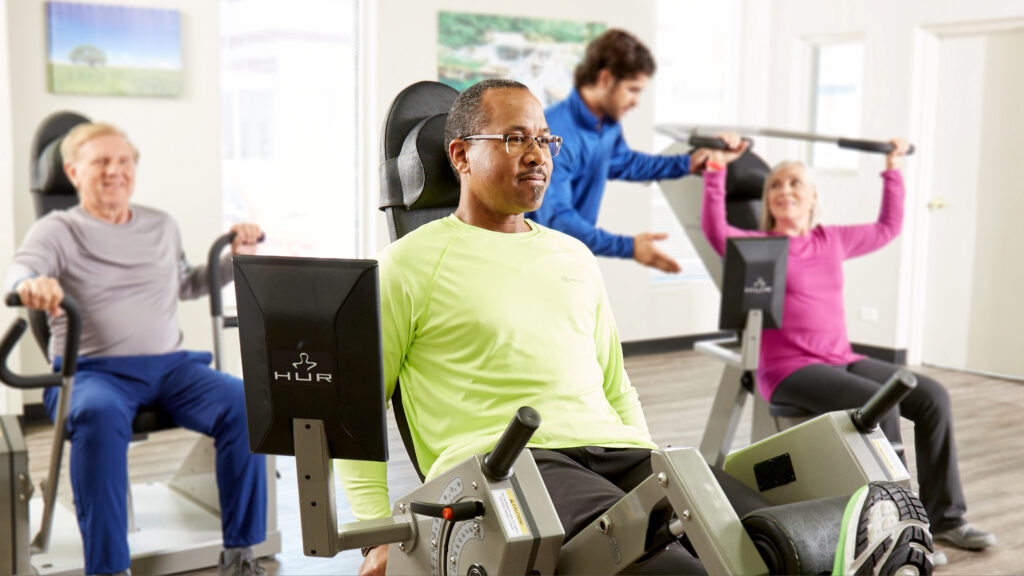
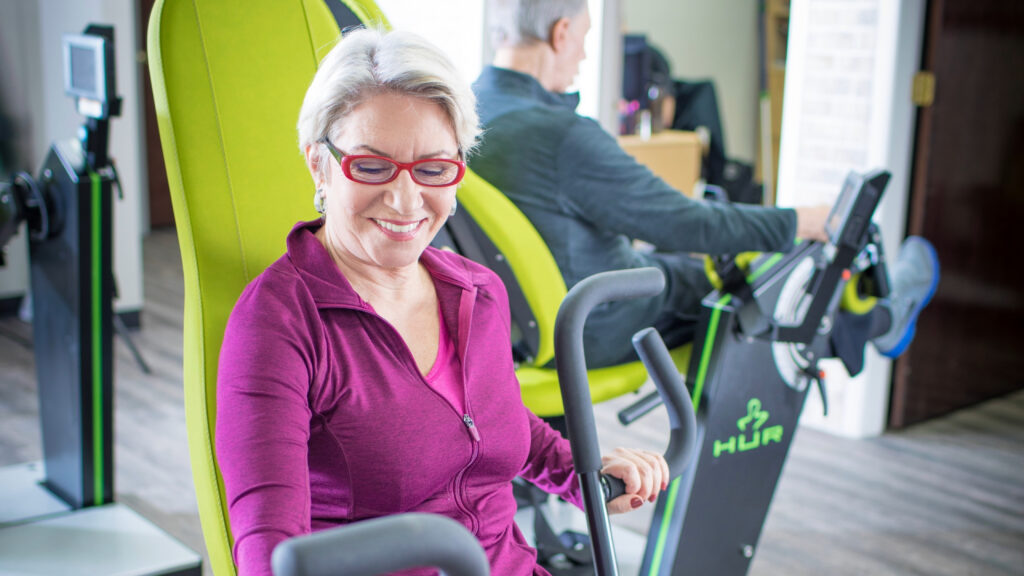
For facilities looking to elevate accessibility, HUR’s inclusive line of strength equipment is designed specifically for older adults and wheelchair users. With zero‑entry designs, pneumatic resistance that adjusts in 0.1 kg increments, and easy‑to‑use digital displays, these machines make it possible to safely progress strength training while keeping workouts comfortable and engaging.
Upper Body Seated Wheelchair Exercises for Arms & Chest Strength
1. Shoulder Retractions (Beginner & Advanced Variations)
Sit up straight and contract the ab muscles to support back muscles. Hold your arms at a 90-degree angle at shoulder level, hands facing down, fingers curved as if griping bicycle handles. Push both arms straight out in front of you, extending as far as possible without locking the joints. Bend the elbows and pull your arms back until your elbows are just slightly behind your torso, squeezing the shoulder blades together you do, and then repeat the motion.
To increase the intensity, hold a light resistance band with both hands. Extend arms parallel to the floor and pull the band apart, squeezing the Rhomboid muscles.
Alternatively, attach a resistance band to a wall or doorknob. Hold the band with arms extended and pull towards your body, bending the elbows slightly behind your torso.
2. Chest Squeeze (With or Without Equipment)
Sitting up straight, with abs engaged to support the muscles in the back, hold a medicine ball, rubber ball, or balloon at chest level, squeezing the ball between your hands to contract the chest muscles. Slowly push the ball forward until your elbows are nearly straight, continuing to squeeze the ball through the whole movement. Slowly pull the ball back to the chest and repeat.
For beginners, this exercise can be accomplished without the medicine ball simply by pressing the palms together.
3. Chest Press (Resistance Band or Accessible Machine)
Wrap a resistance band around the back of your wheelchair, or simply wrap it around your back just below your shoulder blades. Sitting tall and with your abs engaged, grasp each end of the resistant band in your hands and hold your arms at a 90-degree angle at shoulder level with the palms facing down. Extend your arms straight out in front of your body as far as you can go without locking the joints. Hold the stretch for 2 seconds and then bring the arms back to start.
Be sure to keep the movement slow and controlled with the arms held close to your sides during each repetition.
For additional upper body exercises check out, 6 Upper Body Strength Training Exercises for Wheelchair Users. For facilities offering strength equipment, the HUR Accessible Upper Body Line (such as the HUR Chest Press or HUR Lat Pull) provides a safe way to progress these movements with smooth pneumatic resistance and wheelchair‑friendly access.
Lower Body Wheelchair Exercises to Improve Leg Strength
1. Toe Taps (Basic & Progressions)
Sit up straight with abs engaged and feet flat on the ground. Tilt your toes up towards the ceiling and then back down to the floor. Repeat several times.
To increase the level of difficulty, raise one leg in the air so that it’s straight out in front of you, keeping the other foot flat on the floor. Tilt toes up and down several times. Lower the foot back down to the floor and repeat with the other leg.
While toe taps and knee lifts can be done with bodyweight or resistance bands, the HUR Leg Press allow safe, gradual progression for clients who benefit from added resistance in a controlled range of motion.
2. Knee lifts (With or Without Resistance)
Sit up straight with abs engaged and feet flat on the ground. Slowly lift your right leg, bending your knee in a marching motion. Lift your leg as high as you can comfortably go, then lower your foot back to the floor and repeat with the other leg. Continue to repeat this motion, alternating legs.
For increased intensity, pause for 2-10 seconds at the top of the movement.
For additional lower body exercises check out, 7 Seated Exercises for Seniors to Improve Strength.

Core & Ab Wheelchair Exercises for Stability & Strength
1. Tummy Twist (Bodyweight or Light Resistance)
Sit up straight with abs engaged and feet flat on the ground. Hold both arms at a 90-degree angle, with forearms extended in front of you and elbows at your sides. Rotate your upper torso to the left, twisting at the waist, for as far as you can comfortably go. Twist back to center and repeat the motion to the right.
During the movement, imagine sucking in your belly button towards your spine, and keep your lower body completely still.
2. Captain’s Chair (Seated Knee Raises)
Sit up straight and grab the front edge of your seat with both hands. Slowly lift both of your feet off the floor, bending your knees towards your chest as you do, lifting as high as you comfortably can. Squeeze your abs at the top of the movement, and lower both feet back to the floor.
Be careful to not raise your legs past a comfortable position. If you are only able to raise your feet a few inches off the floor to start, that’s fine.
3. The Side Bend Stretch (With or Without Weight)
Sit up tall, with abdominal muscles contracted and hips facing squarely forward. Extend your left arm toward the ceiling, keeping the inside of your upper arm very close to your ear. Hold your left arm in that position, and slowly bend your entire upper body to the right, making a “C” shape with your spine.
To increase the intensity, reach your right arm towards the floor. Hold the stretch for 5-15 seconds. Slowly move back to center and repeat on the other side.
For more advanced core work, the HUR Dual Function Abdominal / Back Extension Machine from the Accessible Line offer controlled, adjustable resistance. These provide a safe way to strengthen trunk stability, which supports better posture and daily function.
Frequently Asked Questions
Can seniors in wheelchairs build muscle with seated exercises?
Yes! Strength gains are possible with consistent training, especially when using resistance bands, light weights, or accessible strength equipment designed for seated users.
What equipment is best for wheelchair strength training?
Resistance bands, light dumbbells, medicine balls, and inclusive strength machines are ideal. Look for equipment designed with accessible grips, height adjustments, and smooth resistance levels.
How often should wheelchair users do strength exercises?
Most seniors benefit from 2–3 strength sessions per week, with rest days in between to allow recovery.

Conclusion
Building strength in a wheelchair is possible, safe, and rewarding. Try these 8 exercises at home or in a community fitness setting — and explore our inclusive strength training equipment to make workouts even more effective. For additional exercises focused on flexibility, check out these Seated Flexibility Exercises for Seniors.